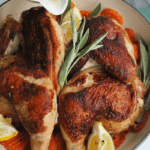
Lemon-Roasted Chicken with Garlic and Sage
An entire roasted chicken during the week? Absolutely. This Lemon-Roasted Chicken with Garlic and Sage can be made in under an hour, and the sauce is life!
Servings: 2 servings
Ingredients
- 4 pound fryer chicken split in half
- 6 tablespoons olive oil divided
- 1 lemon halved
- 1 teaspoon salt
- ¼ teaspoon black pepper
- 1 stick butter (8 tablespoons), cubed
- 6-8 cloves of garlic sliced in half length-wise
- 3 sprigs sage
Sauce
- 1 cup reduced-sodium chicken broth
- 1 lemon
- 2 tablespoons balsamic vinegar
- ¼ teaspoon brown sugar
- 1 teaspoon cornstarch
- 1 shallot diced
Instructions
- Rub the entire chicken with the lemon halves, squeezing the juice out as you go. Combine 3 tbsp. olive oil with salt and pepper in a small ramekin. Cover all sides of the chicken with the olive oil/salt and pepper mixture, using a pastry brush. : let the chicken rest for 1 hour.
- Preheat oven to 400 degrees F. Heat 3 tbsp. of olive oil over medium-high heat in a cast-iron skillet. Once the oil is hot, place both halves of the chicken in the skillet, skin-side down down and sear for 7-10 minutes, until the skin is brown, crispy and loosens from the pan on its own.
- Once you've finished searing, flip the chicken over, and add the sliced garlic, cubed butter, sage leaves and a splash of the chicken broth to the skillet and place the entire skillet in the oven. Roast the chicken for 25 minutes, basting every 7 minutes or so. Internal temperature should read 165 degrees F.
- while the chicken is roasting, whisk together the chicken broth, lemon juice, balsamic vinegar, brown sugar and cornstarch. Set aside.
- For darker, crispier skin, baste the chicken with drippings from the pan and set it under the broiler for an additional 5 minutes. Rotate the skillet half-way through so the skin crisps evenly. Watch it closely so it doesn't burn!
- When the chicken is done roasting/broiling, remove it from the skillet, and transfer it to a casserole dish (you can keep it in the oven on the warm setting). Put the skillet back on the stove burner and turn the flame on medium-low. Pour the sauce mixture into the skillet and use a whisk to loosen up any bits from the bottom of the pan (this is called de-glazing). Let the sauce simmer for 5-7 minutes.
- Remove the sauce from heat, and spoon some of the sauce over the chicken. Reserve some sauce to serve on the side. Garnish with lemon wedges and a few sage leaves. Serve with a vegetable of your choice.