
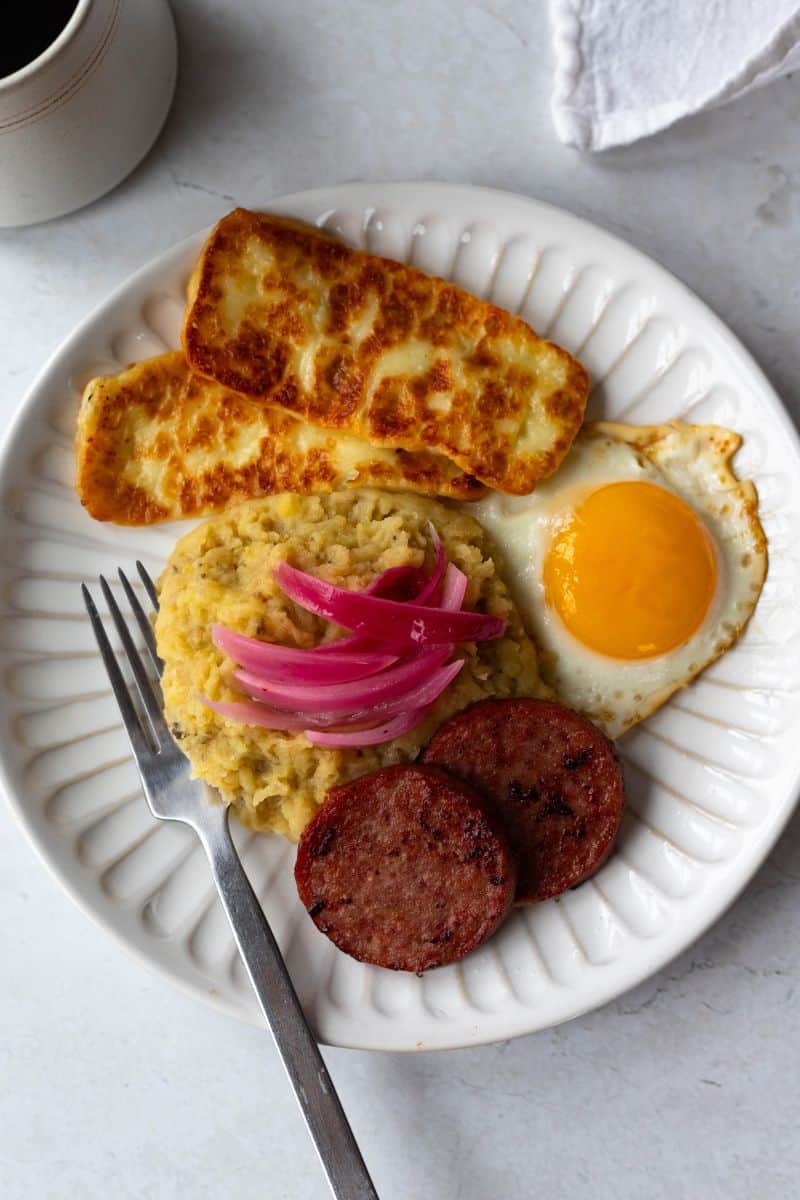
Mangú con los Tres Golpes is a famous Dominican breakfast of boiled and mashed green plantains (mangú) topped with sautéed onions and served with fried salami, fried cheese (queso frito), and fried eggs. It’s savory, satisfying, and deeply rooted in Dominican culture.
Growing up in Providence, you don’t have to be Dominican to know and love this dish—it’s the breakfast staple that everyone loves. Ask anyone where to go for breakfast, and they should point you to one of the city’s best Dominican spots.
It’s always been my go-to for a perfect weekend breakfast, and there’s just no match to homemade. Paired with a glass of morir soñando, you’ve got yourself the ultimate Dominican breakfast!
Why you’ll love this recipe ❤️
- It’s filling and satisfying. This is the kind of dish you’ll look forward to on the weekends. It takes a little time to prepare, but in my opinion, it’s worth it—you’ll be full well past noon!
- It hits all the flavors. The soft, creamy mangú is the perfect base, tying everything together. The saltiness of the fried salami, sweet crunch of fresh onions, and crispy fried cheese all come together perfectly to balance the dish.
- Mangú is so soft when it’s fresh! This is why I love making it at home. Counter spots don’t always make it to order, and it can harden if you take it to go. Unless you’re at a sit-down restaurant where they make it fresh, it’s just not the same.
- It’s one of those dishes that stays true to Dominican tradition. Every cook has their own technique, but the flavors and presentation of this recipe are consistent with the authentic, time-honored way it’s made.
What is tres golpes?
In Spanish, tres golpes translates to “three strikes,” though some people may say “hits” or “blows.” The tres golpes in this dish are the salami, eggs, and cheese that are served with the mangú (mashed green plantains). Some people refer to this dish as mangú completo. I go deeper into the origins and history of mangú, here.
Dominican breakfast ingredients
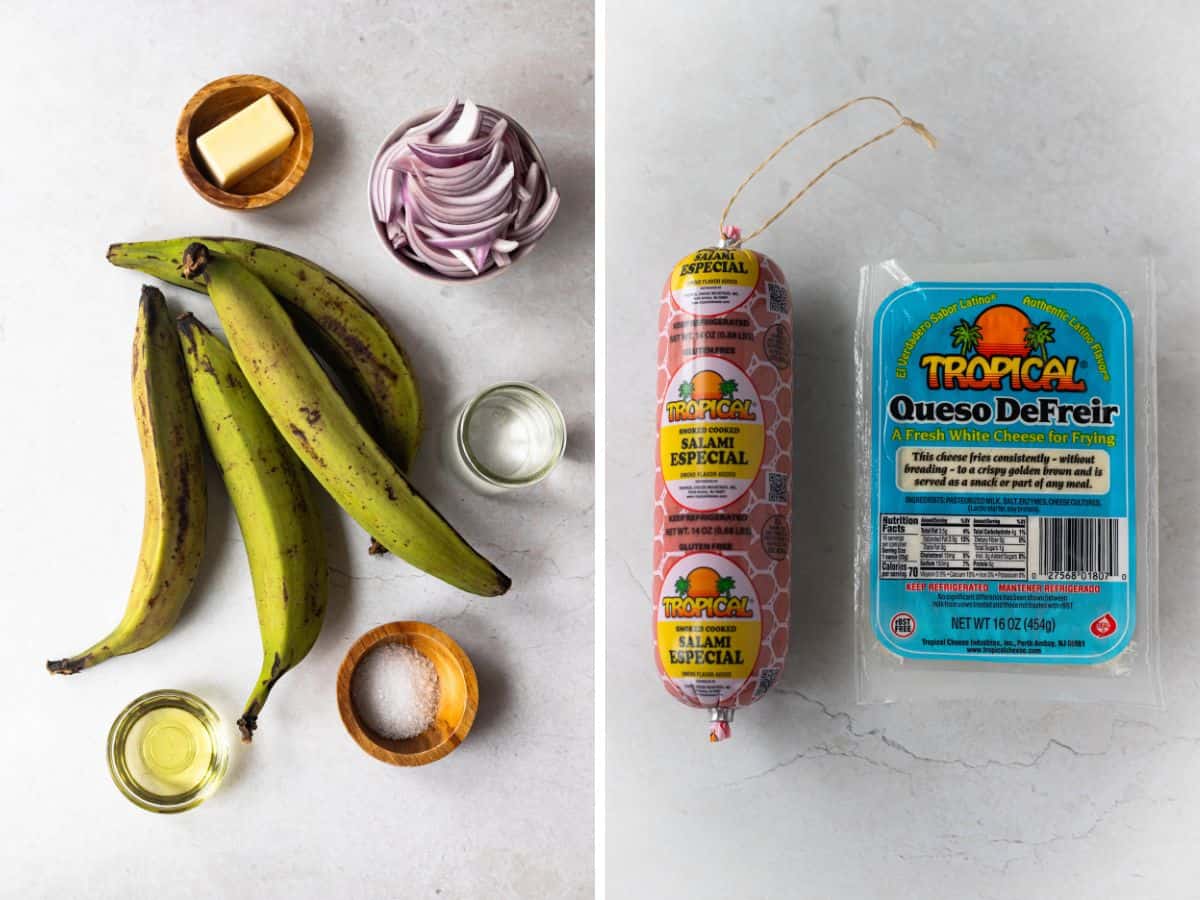
- Large, green plantains (platanos verdes) – You’ll need green, firm plantains for mangú. The ones I used had a tiny hint of yellow from sitting on my counter, but were still mostly green and firm. They mashed perfectly and weren’t sweet.
- Red onion – I used a smaller one here, but if you’re crazy about onions, use a larger one.
- Dominican salami: There are a few different kinds: salami popular, salami especial, and salami superior – any of them work well for this dish. I buy salami especial (see photo above) because it has a good balance of flavor and texture.
- Frying cheese (queso blanco) – make sure it says ‘para freir’ or ‘for frying’ on the package, otherwise it melts and won’t work for this recipe.
- Salted butter – at least 4 tablespoons. The more butter you add, the creamier the mangú will be. It’s not uncommon for people to use an entire stick of butter, but I try to use half that.
- Large eggs – 1 or 2 per person, depending on each person’s appetite
- Other pantry staples: vinegar, vegetable oil, olive oil, salt and pepper
Recipe steps with photos
This section contains detailed instructions and tips with photos. Feel free to refer back here as you follow the instructions in the recipe card at the bottom.
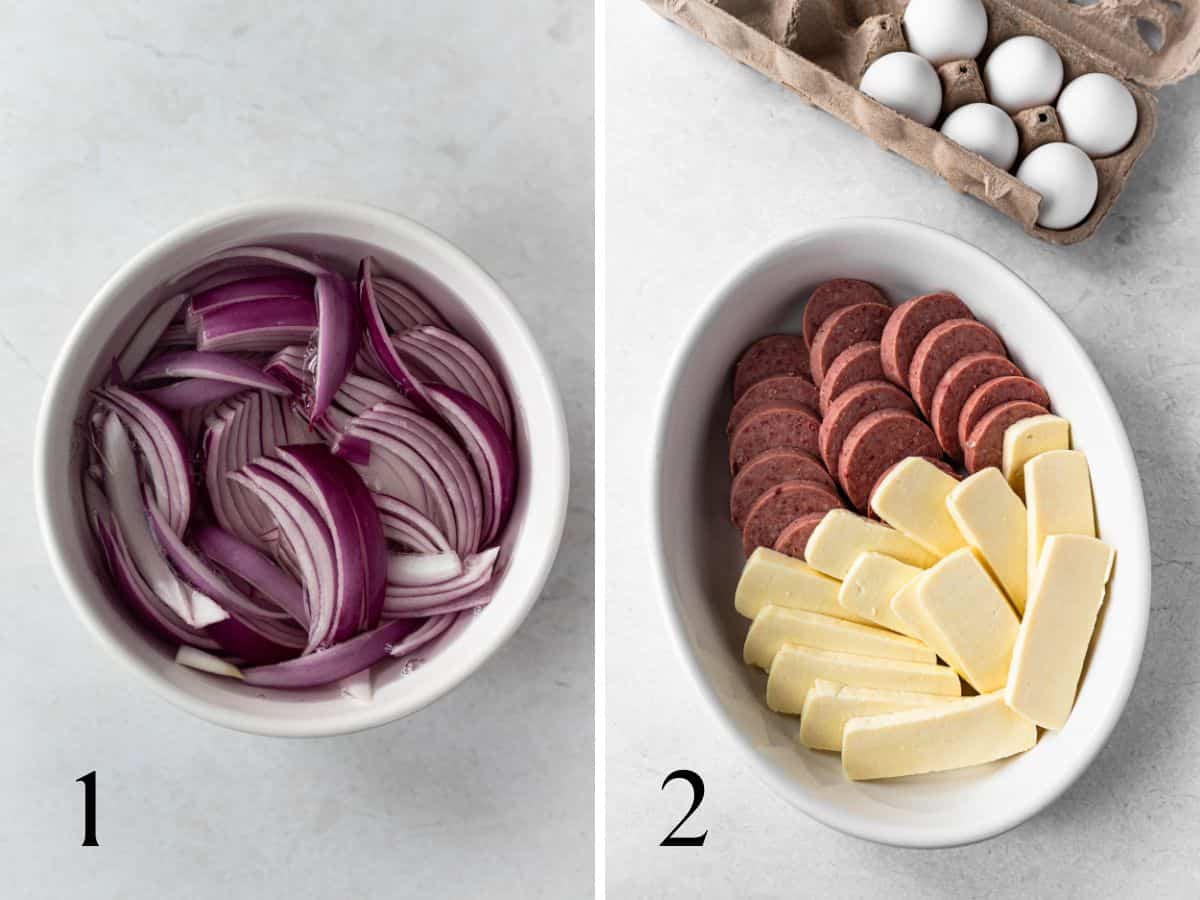
Step 1: Slice the onions and soak them in vinegar for at least 10 minutes.
Step 2: Slice the salami and cheese into ¼-inch thick slices.
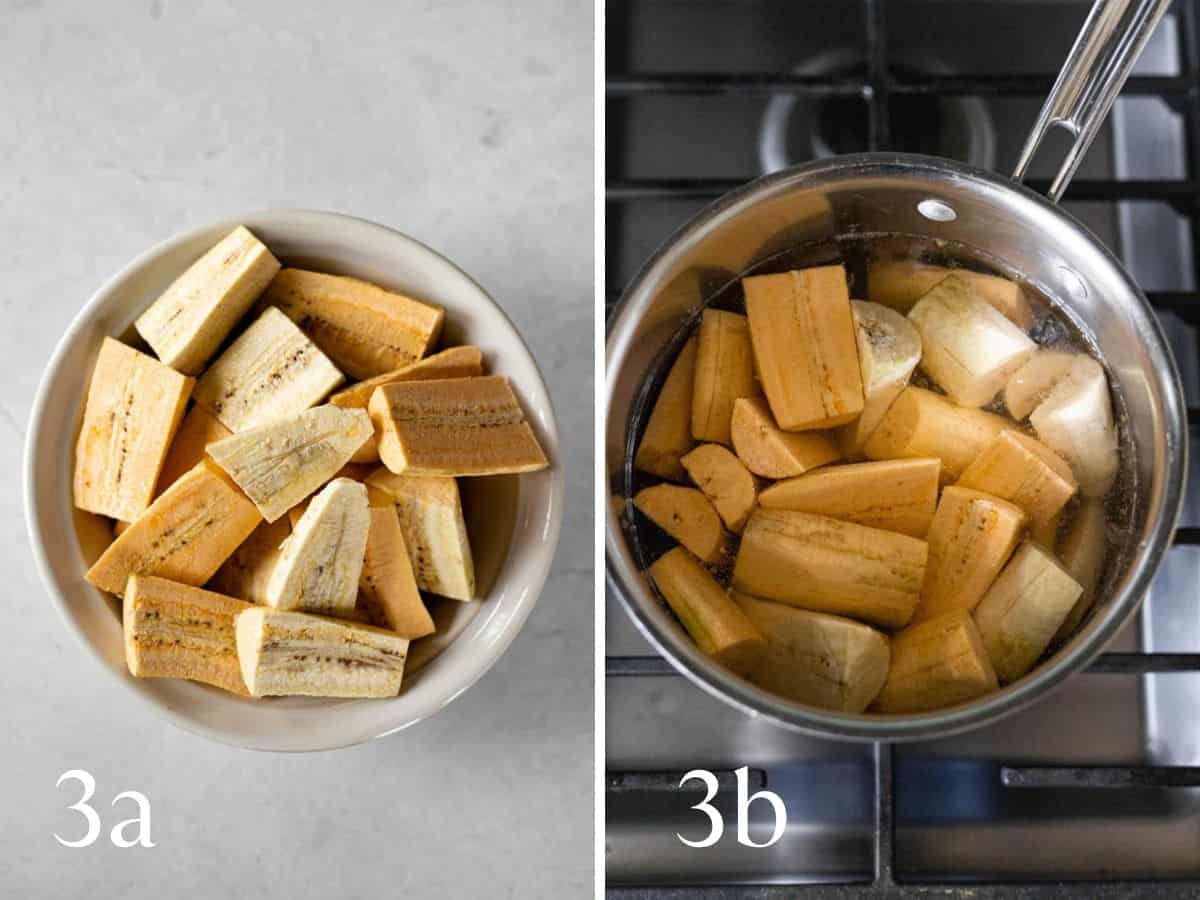
Step 3: Peel and slice the plantains into 1–2-inch chunks. Place them in a deep pan and cover them with water. Add 1 tablespoon of salt and boil for about 30 minutes, or until the plantains are fork-tender.
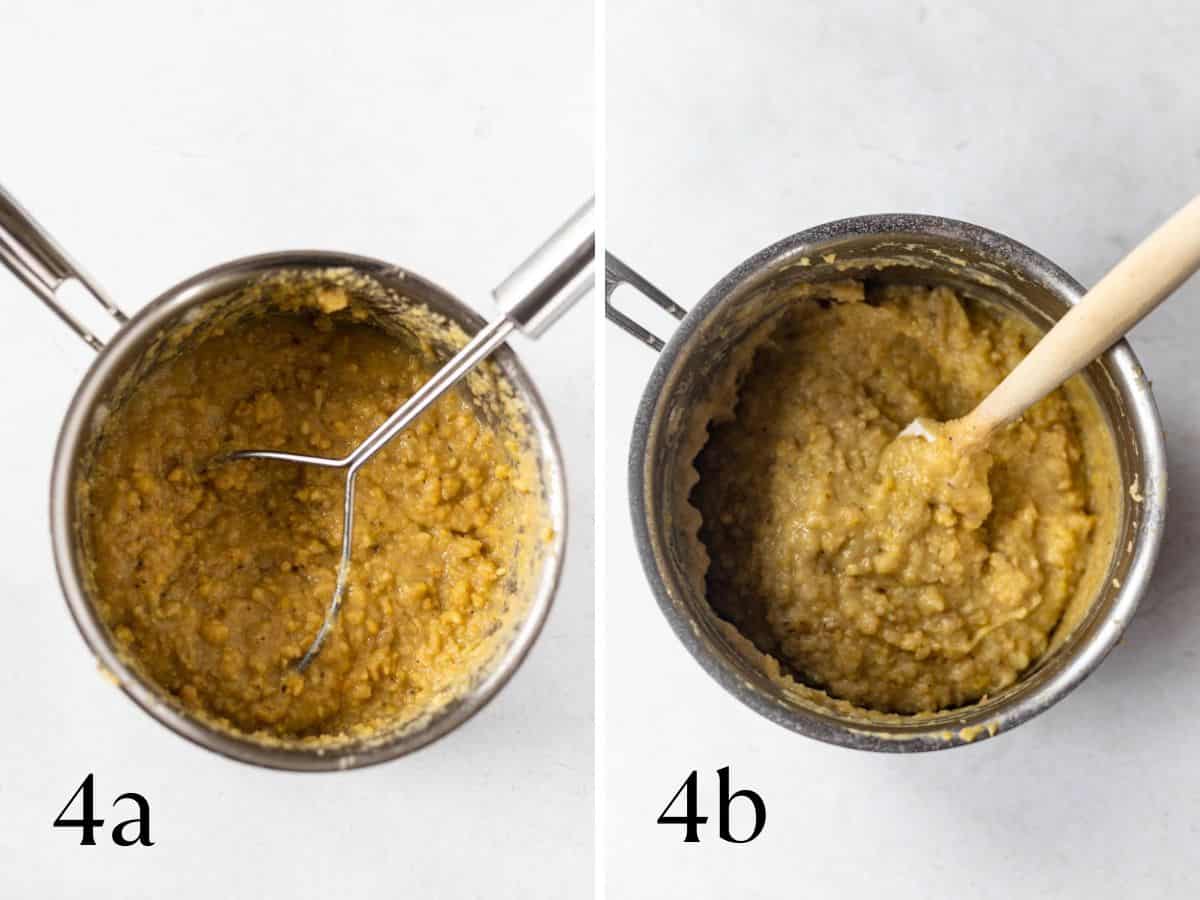
Step 4: Drain the plantains, saving 1–2 cups of the starchy water. Add butter and a splash of the starch water to the plantains and mash until smooth. Gradually add more of the starch water and keep mashing/stirring until you’re satisfied with the texture. Cover the mangú to keep it warm.
Tip: Reserve all the cooking water and keep the extra nearby. If the mangú thickens or hardens, just add a splash of the warm starch water and re-mash to keep it creamy.

Step 5: Heat ⅓ of a cup of frying oil in a large skillet. Once it’s hot, fry the sliced cheese in batches, until golden brown on both sides. Remove from the skillet and drain in a single layer on paper towels.
Step 6: Fry the pieces of salami in the same skillet, adding a little oil (only if needed). Cook until browned on both sides.
Tip: Keep the salami and cheese warm in an oven set to 170°F while you finish cooking.
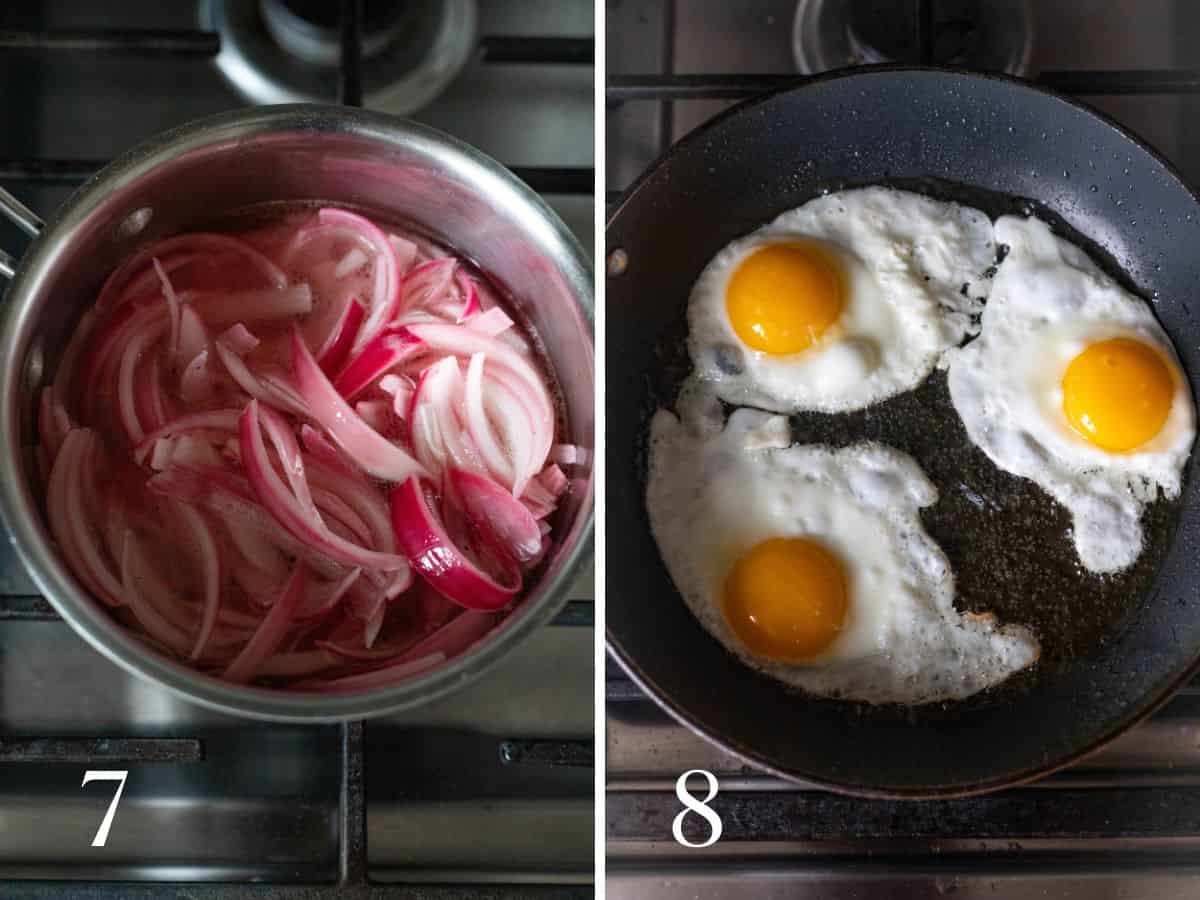
Step 7: Heat 1 tablespoon of olive oil in a small pan and fry the onions with a little of the vinegar until they’re tender but still slightly crunchy.
Step 8: Use a paper towel to wipe out the skillet and add another ⅓ cup of oil (less if desired). Once the oil is hot, crack each egg into the pan and fry, sunny side up, until the yolks are hard.
Tip: To cook the yolks without flipping the eggs, carefully tilt the pan and spoon hot oil over the tops. This method works best if you use at least ⅓ cup of oil. If this is too much oil, you can prepare your eggs however you normally like them.

Step 9: Top the mangú with onions and immediately serve with salami, cheese, and eggs on the side.
Serving Suggestions & Variations
- While Mangú con los Tres Golpes is the most common presentation, some people add a fourth “golpe“—longaniza (Dominican sausage)—this is referred to as Mangú con los Cuatro Golpes.
- You don’t have to include every “golpe” in your dish. Feel free to skip one if you prefer (some people don’t care for pork so they skip the salami).
- Traditionally, the eggs are served sunny side up with fully cooked yolks, but you can prepare them however you like.
Tips and tricks
- Reserve the starchy water: Save all of the water from boiling the plantains. You’ll need it to mash the mangú and you can reheat some later to keep the mangú creamy if it thickens.
- Keep your oven warm: Because there’s so many parts to this dish, it’s hard to keep everything hot. Use a warm oven (set at 170° fahrenheit) to keep the fried cheese and salami warm until you’re ready to serve.
- Go in the order that works for you: I start with the mangú, leaving the plantains in hot water until I’m ready to mash. I don’t typically start with the salami because it makes a mess out of the pan, but go in the order that makes the most sense for you.
- Reduce the amount of oil if desired – as you get comfortable with the recipe, feel free to experiment with cutting down on the amount of oil used. For example, you can use cooking spray to cook the salami and eggs. The cheese typically does require oil for frying, but I try to use as little as possible
Recipe FAQ’s
Q: What is a typical Dominican breakfast?
A: While mangú con los tres golpes (also referred to as mangú completo) is the national dish of the Dominican Republic, a typical breakfast is much lighter! Dominicans usually eat a light breakfast during the week, such as pan dulce (sweet bread) and warm pastries (like Dominican arepas), along with café con leche or jugos naturales (fruit juices).
Q: Is mangu only for breakfast?
A: While mangú is undoubtedly a breakfast dish, mangú can be eaten at any time of day. That said, island cultures tend to eat breakfast later in the day (you know we love an all-day brunch!) so it’s not uncommon to eat tres golpes later in the day.
Re-heating and storing leftovers
- I love this dish because it carries well into the next day! The mangú, salami and cheese can be stored in the refrigerator for up to 3 days. I wouldn’t go more than 1-2 days on the eggs, but that’s just my preference.
- The best way to re-heat fried cheese and salami is in the oven at 350° fahrenheit, for 10-12 minutes. Mangú itself tastes best when it’s reheated in a double boiler or steamer (you can use parchment or foil to line the basket).
- Alternatively, you can save the starchy water from the plantains, boil it and use it to re-mash the mangu.
Related Recipes

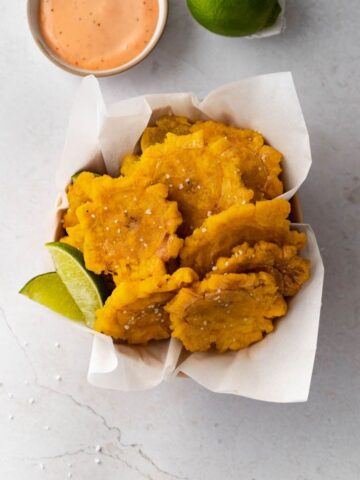
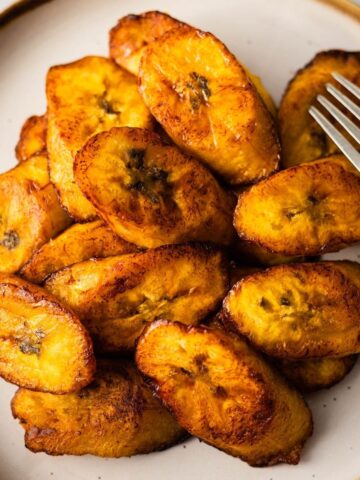
Love this recipe? Please leave a 5-star 🌟🌟🌟🌟🌟 rating in the recipe card below & consider scrolling down and leaving me a review if you REALLY liked it. Thanks!

Dominican Breakfast (Mangú con los Tres Golpes)
Ingredients
- 1 red onion sliced thin
- ½ cup white vinegar
- 10 oz package frying cheese queso blanco, labeled 'queso de freir'
- 14 oz package Dominican salami labeled salami especial
- 4 large green plantains
- 1 tablespoon salt
- 4 tablespoon salted butter or margarine
- 3 tablespoon olive oil extra-virgin
- ½ cup vegetable oil for frying
- 4 eggs
- salt and pepper to taste
Instructions
Prep the ingredients
- Slice the onions and soak them in vinegar for at least 10 minutes.
- Slice the salami and cheese into ¼-inch thick slices.
Prepare the mangú
- Peel and slice the plantains into 1–2-inch chunks. Place them in a deep pan and cover with water. Add 1 tablespoon of salt and boil for 30 minutes, or until plantains are fork-tender.
- Drain the plantains, saving 1–2 cups of the starchy water. Add butter and a splash of the starch water to the plantains and mash until smooth. Gradually add more of the starch water and keep mashing/stirring until you’re satisfied with the texture. Cover the mangú to keep it warm.
Fry the cheese, eggs and salami and onions
- Heat ⅓ of a cup of frying oil in a large skillet. Once it’s hot, fry the sliced cheese in batches, until golden brown on both sides. Remove from the skillet and drain in a single layer on paper towels.
- Fry the pieces of salami in the same skillet, adding a little oil (only if needed). Cook until browned on both sides. Tip: Keep the salami and cheese warm in an oven set to 170°F while you finish cooking.
- Use a paper towel to wipe out the skillet and add another ⅓ cup of oil (less if desired). Once the oil is hot, crack each egg into the pan and fry, sunny side up, until the yolks are hard.
- Heat 1 tablespoon of olive oil in a small pan and fry the onions with a little of the vinegar until they’re tender but still slightly crunchy.
Serving mangu con los tres golpes
- Top the mangú with onions and immediately serve with salami, cheese, and eggs on the side. Season the eggs with a pinch of salt and pepper.
Notes
- Save all of the water from boiling the plantains. You'll need it to mash the mangú and you can reheat some later to keep the mangú creamy if it thickens.
- Use a warm oven (set at 170° fahrenheit) to keep the fried cheese and salami warm until you're ready to serve.
- I start with the mangú, leaving the plantains in hot water until I’m ready to mash. Then I fry the cheese, salami and eggs in this order, but do what makes sense to you!
- As you get comfortable with the recipe, feel free to experiment with cutting down on the amount of oil used.
- Store leftover mangú, salami and cheese in the refrigerator for up to 3 days. Fried eggs can keep up to 2 days.
- Reheat salami, eggs and cheese in oven. Re-mash the mangu with hot starchy water (if you have any left) or in a double boiler or microwave.
Nutrition

Leave a Reply