
Moro de habichuelas — rice and beans cooked together — is one of the most popular Dominican side dishes! Seasoned with sofrito, herbs, sazon, and adobo, it gets its signature yellow color as it cooks. It’s easy to make and comes together in one pot on the stovetop.
This version uses pinto beans, but you can also red kidney beans, or cranberry beans — whatever you have on hand. There are many versions of moro, you could also try my recipe for moro de guandules (rice with pigeon peas) or moro with black beans.
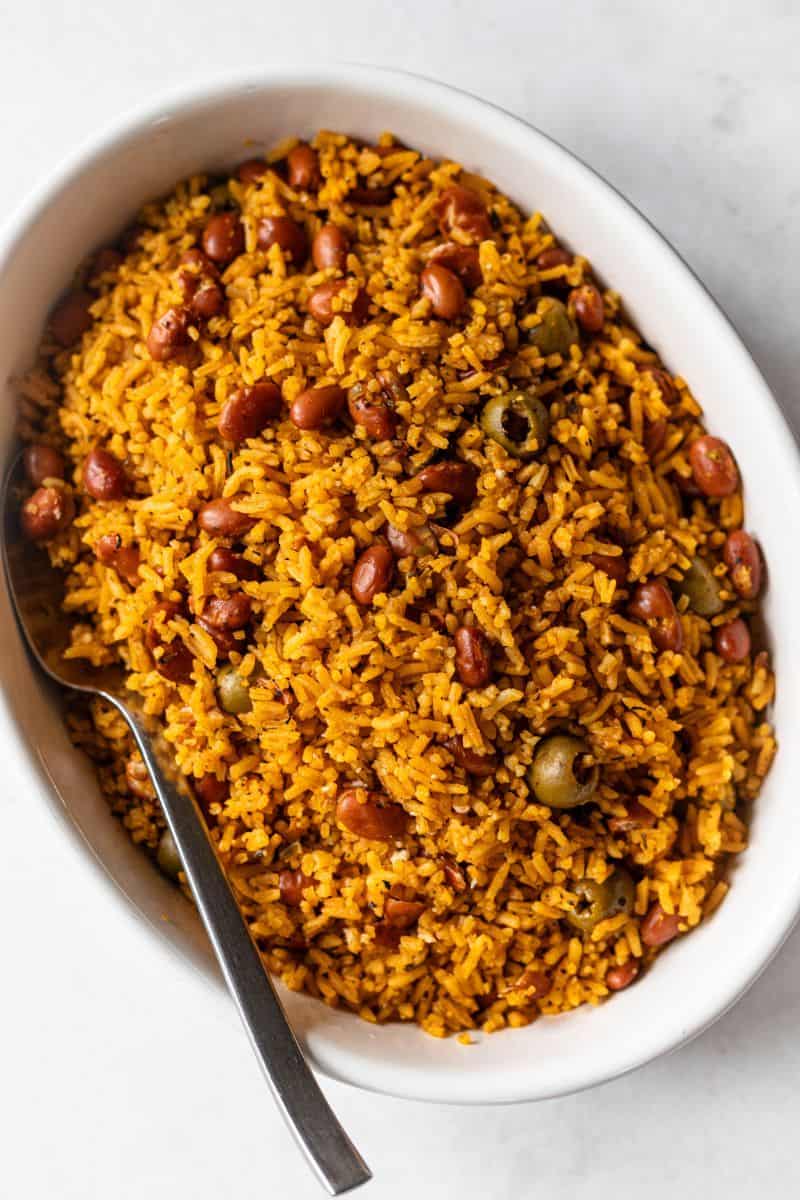
Why you’ll love this recipe ❤️
- In Dominicans and other island cultures consider rice the most important dish – it’s usually the first thing people reach for at the table. Moro de habichuelas goes with everything from fried fish, stewed beef or stew chicken and grilled meats.
- That said, a lot of people find rice intimidating to make, but it doesn’t have to be! This recipe walks you through step by step and comes together in under 30 minutes! You probably already have all of the ingredients you need in your pantry.
- Just enough for small households. A lot of the recipes we grew up with were meant to feed large families, but this one reflects how a lot of us cook now.
- Easy to store and reheat – leftover rice should be stored in the refrigerator and can easily be heated up in the microwave or steamer. I give clear directions on how to do this further down in the post.
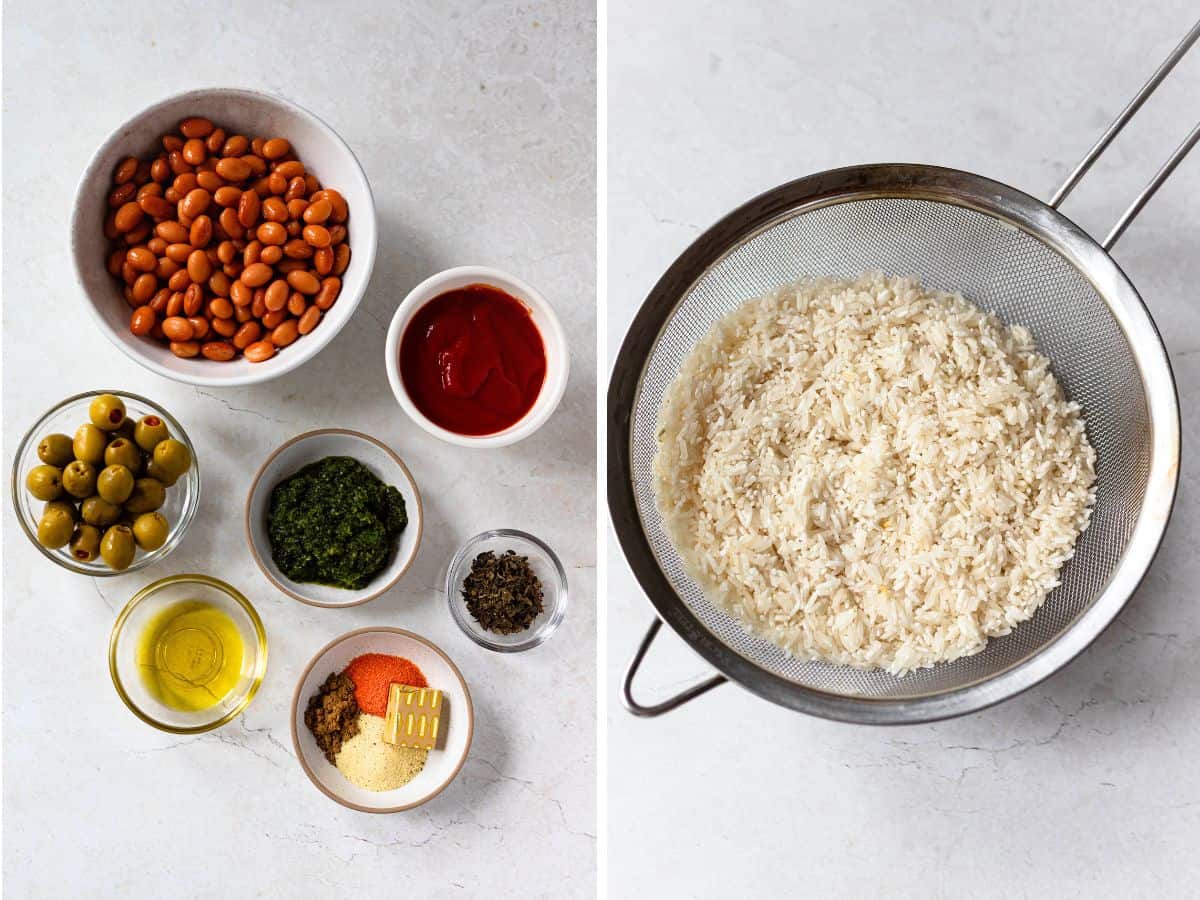
Ingredients
- Long or extra-long grain white rice – I usually use Canilla or jasmine rice, depending on what I have in the pantry. Both cook up fluffy and separate, which is what you want for moro.
- Red beans – pinto beans are most commonly used, but you can also use kidney, pink, or even cranberry beans.
- Sofrito – is where the flavor of the dish starts. It’s a mix of blended green pepper, onion, garlic, and cilantro. You can make it from scratch or use a pre-made version if that’s easier.
- Tomato sauce – you won’t really taste it once everything’s cooked, but it adds a little flavor and helps give the rice its color.
- Adobo and sazón – these are dry seasoning blends that are staples in Dominican and Caribbean kitchens. Adobo is usually a mix of salt, garlic, and pepper. Sazón adds color and boosts flavor — look for one with annatto or saffron (usually in a yellow and orange box) if you can find it.
- Other seasonings – I usually add cumin, dried oregano, and a bouillon cube. No need to add salt unless you taste the broth and feel like it needs more — the sazón, adobo, and bouillon usually cover it.
- Green olives are optional, but I highly recommend adding them. Moro is usually pretty mild, and the olives add a briny, sharp flavor. You can even add a teaspoon or two of the olive juice — just skip the extra salt if you do.
Recipe steps with photos
I’ve laid out all the recipe steps with photos for you to reference here. If you’re just looking for the ingredients and directions, scroll to the recipe card at the bottom.
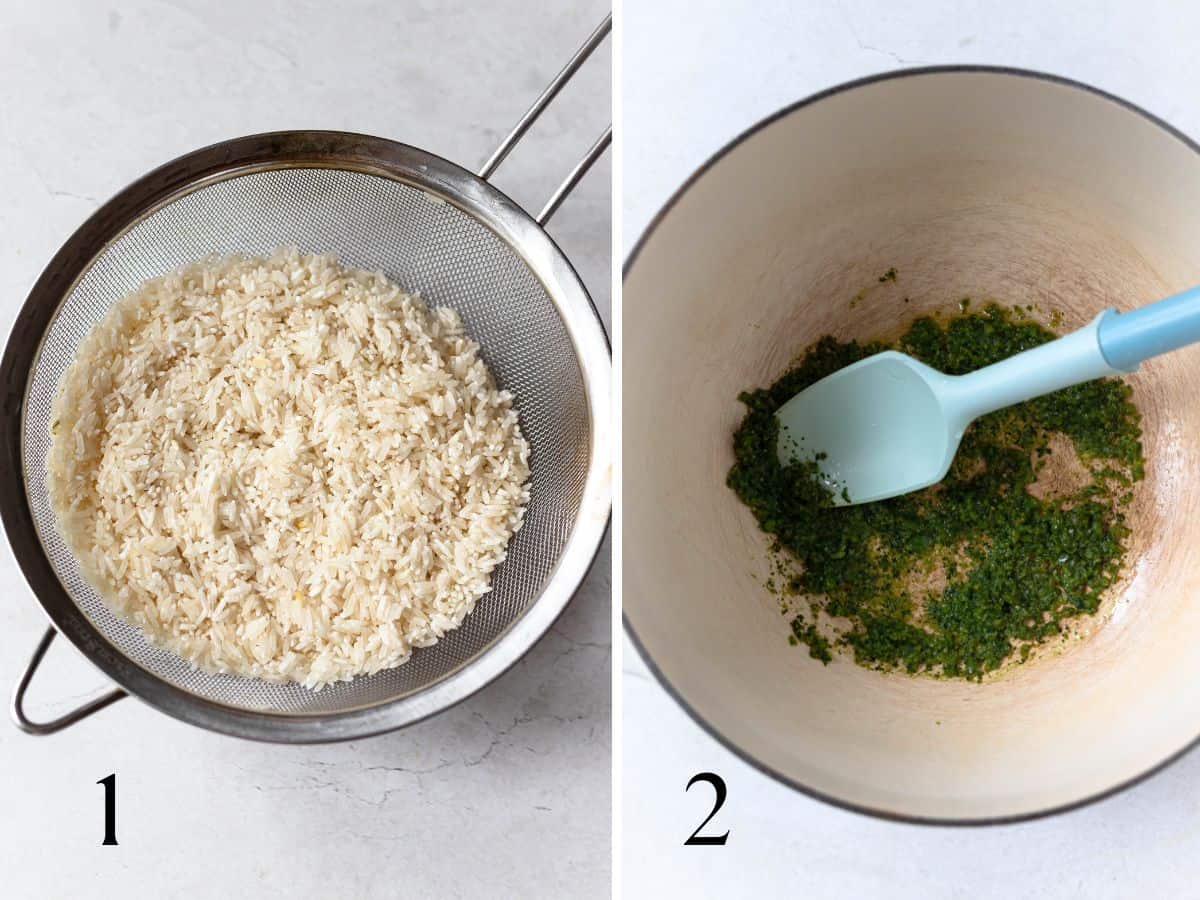
Step 1: Using a mesh strainer, rinse the rice under cold water until the water runs clear.
Step 2: Heat the oil in a large, heavy-bottomed pot over medium heat. Add the sofrito and sauté for a few seconds, until fragrant.
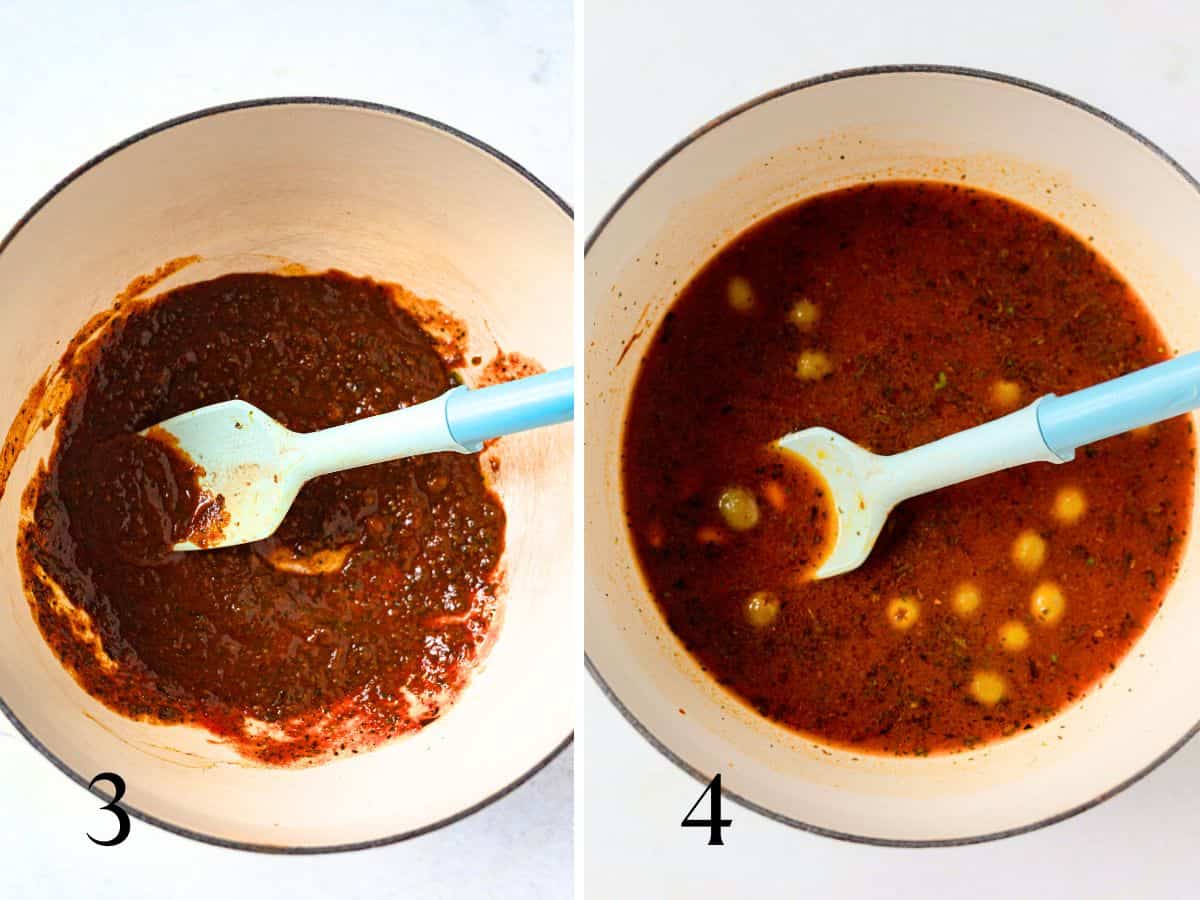
Step 3: Stir in the tomato sauce, oregano, cumin, adobo, sazón, and a crushed up bouillon cube (you can use your fingers to break it up).
Step 4: Add the beans, olives, olive juice, and 2 cups of water. Taste the broth and season with salt and pepper, if needed. Then bring to a simmer. If you’re making the beans from scratch, refer to the instructions in the notes section of the recipe card below.
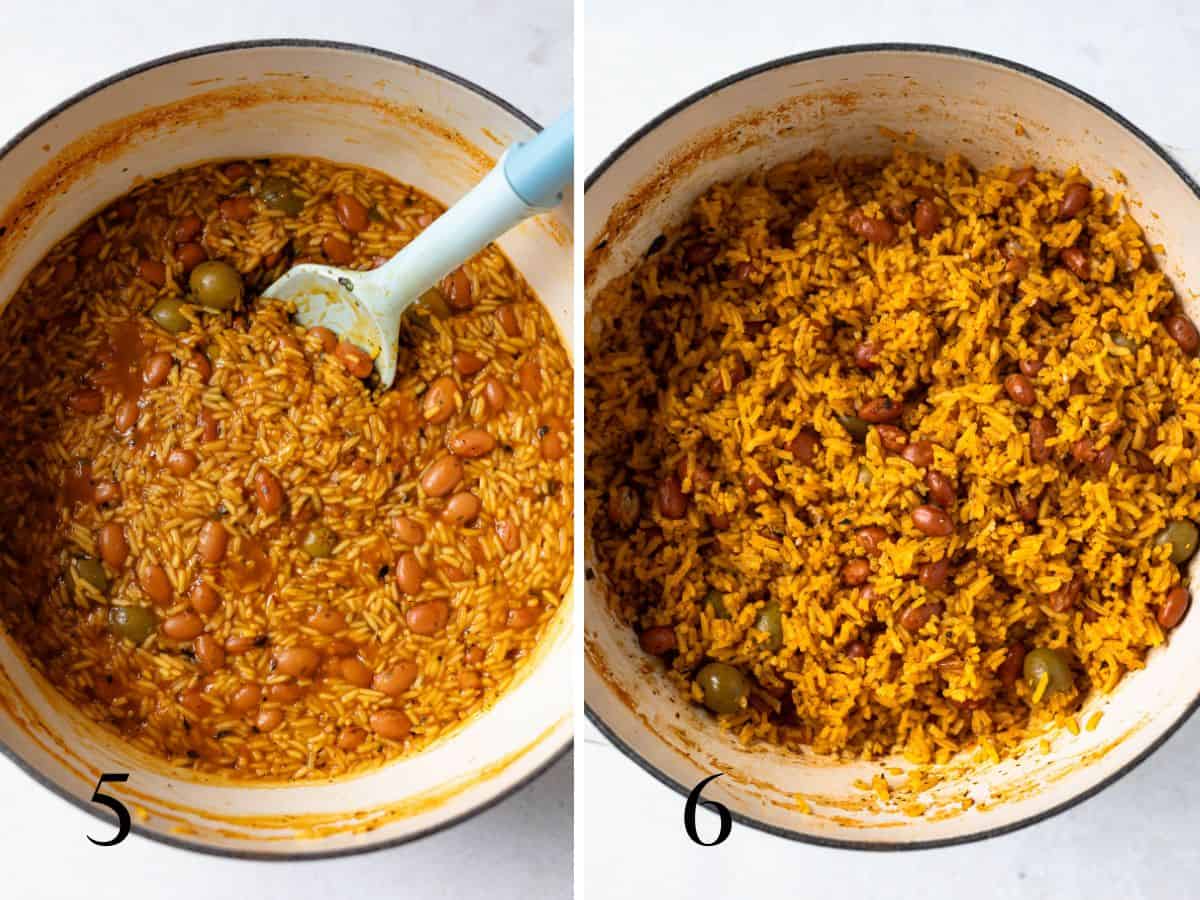
Step 5: Once the liquid starts to simmer, add the rice and stir to break up any clumps. Raise the flame slightly and and stor the rice frequently, letting most of the liquid cook off. The rice and beans should still be wet, like the photo above. Then cover the pan with a tight-fitting lid and turn the burner all the way down and let the rice cook for 30-35 minutes.
Step 6: Once the rice has cooked, turn the burner off and let sit for 5-10 minutes to let the steam finish cooking the rice. Take the lid off and taste the rice, it should be tender and cooked all the way through. Fluff the rice with a fork and serve.
Helpful tips
- Make sure to keep the flame low while the rice is cooking, if it’s too high the rice and beans will burn.
- Uncovering the rice while it cooks, can be a bit controversial. Some people swear you should never lift the lid, because it lets the steam out but I’ll admit that I do this from time to time to make sure that the rice is done. If you must check the rice, do so at the very end, while there’s a minute or 2 left and the burner is still on.
- If your rice needs to cook more, here’s a trick — grab a soaking wet paper towel and wring it out over the rice. Then lay the paper towel over the rice, re-cover with the lid and let it cook for 5-10 minutes more. Make sure your burner is turned all the way down low so the rice doesn’t burn.

Serving suggestions
Rice and beans is one of those things that go with everything! They’re usually served meat or another main protein, and at least one other side.
- Moro de habichuelas is delicious with stewed or saucy dishes like carne guisada (stew beef) or pollo guisado (stew chicken). The rice soaks up all the flavors of the sauce!
- Roasted pork shoulder (pernil) and bistec encebollado (steak with onions) or fried fish are also great choices, though for dry meats you might prefer plain white rice topped with habichuelas (stewed red beans) instead.
- For a fresh, balanced meal, a simple green salad is perfect. If doubling up on starches is your thing, Dominican potato salad and rice on the same plate as rice is top-tier!—whether you like pink potato salad with beets or the white version (ensalada mixta).
Storing leftovers
- Leftover rice and beans will last up to 3 days in the fridge if kept in an airtight container. I personally think it’s best eaten within that time—after that, the rice starts to get a little hard.
- To reheat, use the microwave or a metal steamer (the kind that sits over a pot of boiling water). I prefer steaming because it makes the rice taste fresh again, without drying it out.
More side dish recipes
- Rice and Black Beans
- Rice and Pigeon Peas
- Spanish Yellow Rice
- Yuca Fries
- Tostones – Fried Green Plantains
- Platanos Maduros – Sweet Fried Plantains

Dominican Rice and Beans (Moro de Habichuelas)
Equipment
- heavy bottomed pan (caldero) 3.5-quart or larger
Ingredients
- 2 cups long grain white rice
- 1 tablespoon olive oil
- 2 tablespoons sofrito
- ⅓ cup tomato sauce
- 1 teaspoon dried oregano
- ½ teaspoon cumin
- 2 teaspoons adobo
- 1.5 teaspoon sazon should contain saffron, look for the yellow package
- 1 large bouillon cube
- 15 ounces canned pinto beans drained
- ¼ cup green olives plus 1 tablespoon olive juice
- salt and black pepper to taste
- 2 cups water
Instructions
- Using a mesh strainer, rinse the rice under cold water until it runs clear, then set it aside.
- Heat the oil in a large, heavy-bottomed pot over medium heat. Add the sofrito and sauté for a few seconds, until fragrant.
- Stir in the tomato paste, oregano, cumin, adobo and sazon. Use your fingers or a wooden spoon to break up the bouillon and stir until the tomato paste is smooth.
- Add the beans, olives, olive juice and 2 cups of water. Taste the broth and season with salt and pepper as needed, then bring it to a simmer. If you're using beans from scratch, refer to the notes section below.
- Once the liquid starts to simmer, add the rice and stir. Turn the burner up slightly and stir the rice frequently, letting most of the liquid cook off.
- Once most of the liquid is gone (the rice should still be wet), cover the pot with a lid and turn the burner down very low. Let the rice cook for 30-35 minutes. Don't lift the lid while the rice is cooking!
- Once the 30 minutes are up, turn the burner off. Keep covered and let the rice rest for 5-10 minutes, then lift the lid and taste the rice. The grains should be tender and separated. Fluff the rice using a fork and serve.
Notes
-
- Measure 1 cup of dried beans, rinse, and drain them well.
- Place the beans in a bowl and cover them with water. Cover the bowl with plastic wrap and let them soak overnight.
- In a deep pot, heat 1 tablespoon of oil over medium heat. Add 1 tablespoon of sofrito and sauté for about a minute until fragrant.
- Add the soaked beans and their water to the pot (some people change out the water, but I don’t). Add more water if needed to fully cover the beans and stir in 2 teaspoons of salt.
- Bring the beans to a boil, then reduce to a simmer. Cook for 1–2 hours, or until the beans are soft. Keep an eye on the pot, making sure there's always plenty of cooking liquid.
- Once the beans are done, reserve 3 cups of the liquid, then drain the rest.
- Wash and rinse the rice before adding it to the pan. This removes extra starch and chemical residue.
- The key to getting that nice deep color is to use as much bean liquid as you can. Make sure to get all of that thick black stuff at the bottom of the can!
- Use a pot with a tight-fitting lid. If you're unsure if your lid fits tightly, cover the pot with foil before placing the lid on. This traps the steam in and helps the rice cook evenly.
- Don't lift the lid while the rice is cooking—doing so lets steam out of the pan and could prevent the rice from cooking properly.
- It's normal for some rice to stick to the bottom of the pot. Keep a low flame at all times so it doesn't burn.

Amy Dawson says
Tomato paste? Or tomato sauce? Big difference in the amount of liquid / broth one adds. Please review?